Cracked Heat Exchanger: Warning Signs to Take Seriously
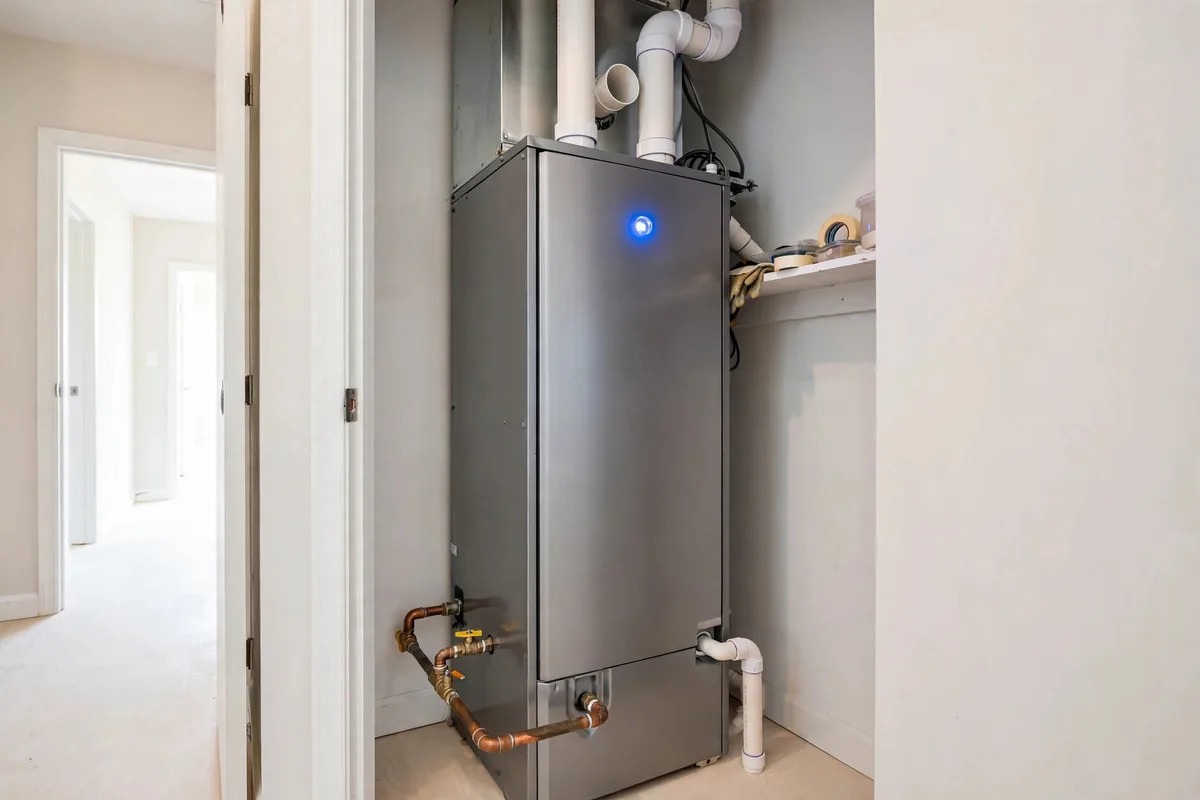
Signs of a cracked heat exchanger include a flickering or yellow burner flame, soot around the furnace, a strange smell when heat runs, and carbon monoxide detector alerts. This is a safety emergency: turn off the furnace and call (619) 939-1577 immediately.
Most furnace problems cost comfort or money. A cracked heat exchanger can cost safety, which is why it gets its own discussion. The heat exchanger is the metal chamber where combustion happens: burners fire inside it, household air flows across its hot outer surfaces, and the flue carries exhaust outside. A crack breaks the barrier between those two air streams, and combustion byproducts, including carbon monoxide, can ride the supply air into the living space. Here is what to watch for and what to do.
Why Cracks Happen
Heat exchangers live a hard life of thermal cycling: heating up and cooling down with every cycle, expanding and contracting, year after year. Over thousands of cycles, metal fatigues. The risk climbs with age, with oversized furnaces that short cycle (more cycles per season), and with chronic overheating from restricted airflow, which stresses the metal beyond its design. Most cracks appear in furnaces past 15 years, but poor airflow can age an exchanger prematurely. This is one more reason filters and airflow matter: they protect the most expensive part of the furnace.
Warning Sign 1: Abnormal Flame Behavior
With the furnace running, burner flames should be steady and mostly blue. Flames that roll out toward you when the blower starts, lift off the burners, or dance erratically can indicate a breach: air from the blower side is pushing through a crack and disturbing combustion. You can observe this through the burner viewport without opening panels. It is not conclusive on its own, but it is worth an inspection.
Warning Sign 2: Soot and Odors
Soot streaks around supply registers, on the furnace cabinet or near the flue indicate incomplete combustion, which a cracked exchanger can cause or accompany. Unusual odors when the heat runs, beyond the brief dusty smell of season startup, deserve attention too. Soot is never normal; it means something in the combustion process is wrong.
Warning Sign 3: Carbon Monoxide Alarm
A CO alarm sounding when the furnace runs is the clearest warning. Treat every alarm as real: get everyone out, ventilate, and call emergency services. Do not assume a faulty detector until the furnace has been tested. Detectors themselves expire, so check dates and replace them on schedule, but an alarm during heating season always earns an inspection.
Warning Sign 4: Visible Cracks or Rust-Through
On some furnaces, portions of the exchanger are visible with panels removed (a technician task, not a homeowner one). Visible cracks, heavy rust-through or separated seams are definitive. During an inspection, the contractor documents what is found with photos so you see the evidence yourself.
What Happens After Confirmation
A confirmed crack usually means furnace replacement rather than repair. Heat exchanger replacement is major surgery, and on an older furnace the economics rarely work compared to a new system with a fresh warranty and better efficiency. The inspection report should lay out the findings plainly so the decision is obvious. Until then, do not run a suspect furnace. And regardless of your furnace's age, keep working carbon monoxide detectors on every level of the home, tested monthly.
How La Mesa's Furnace Stock Raises the Stakes
La Mesa's neighborhoods are full of furnaces installed from the 1980s through the early 2000s, which puts many of them squarely in the window where heat exchangers deserve scrutiny. These units have run thousands of heating cycles, and most have never had their exchangers visually inspected because nothing ever seemed wrong. Age plus East County's dusty air, which accelerates wear on burners and affects combustion quality, is the combination that produces cracks. If your furnace is in this age range and has never been inspected, that alone is reason enough to schedule one, even with no symptoms at all.
Oversized furnaces deserve extra attention here. A furnace with too much capacity for the house short cycles through more heating cycles per season than a properly sized one, and every cycle adds thermal stress to the exchanger. If your furnace has always run in short bursts since installation day, mention it when you schedule the inspection.
What an Inspection Visit Looks Like
Expect the contractor to remove the burner access panel, examine visible exchanger surfaces with a bright light and inspection mirror, observe flame behavior through a full heating cycle, and take carbon monoxide readings in the supply air stream. The visit usually takes under an hour when nothing is found. If a crack is found, you will see the evidence yourself: a photo of the split metal or the CO reading that confirmed it. A proper inspection leaves no ambiguity, and it should come with no pressure either, just evidence and your options laid out plainly.
Call (619) 939-1577 to schedule a heat exchanger inspection.
Carbon Monoxide Detectors: Your Backstop
Inspection is how you find a cracked heat exchanger. Detection is how you survive one that has not been found yet. Every home with gas appliances should have carbon monoxide detectors on each level, outside sleeping areas, tested monthly and replaced when they expire, usually seven to ten years. Place them according to the manufacturer's instructions, not by guesswork: too close to the furnace can cause nuisance alarms, too far misses the point. A detector will not prevent a crack, but it turns a silent hazard into an alarm you can act on. If yours are old, missing or beeping for new batteries, fix that this week, before heating season.
Frequently Asked Questions
What should I do if I suspect a cracked heat exchanger?
Shut the furnace off, make sure carbon monoxide detectors are working, ventilate if you have concerns, and call (619) 939-1577 for inspection. Do not run the furnace until it is checked.
How does a technician confirm a crack?
Visual inspection of accessible surfaces, flame behavior analysis, and carbon monoxide testing around the supply air. You should be shown the evidence: photos of the crack or the readings that found it.
Is an old furnace automatically unsafe?
No. Age increases the odds of metal fatigue, but many older furnaces have sound exchangers. Inspection, not age alone, determines safety. That said, furnaces past 15 to 20 years deserve a careful look.
Need Help With Your Furnace?
If this guide describes what your furnace is doing, the next step is a professional diagnosis. Call (619) 939-1577 and describe the symptoms; FurnaceGuard La Mesa will match you with an independent contractor and schedule the visit.