Main causes
Ignition, flame sensing, gas supply and fan settings cover nearly every cold air call.
The fan runs, the vents push air, and the air is cold. In La Mesa that almost always means the blower is doing its job while the burners never lit, and the reasons are a short, diagnosable list.
A La Mesa furnace blowing cold air is usually moving air without making heat: the igniter failed, the flame sensor shut the burners down, or the thermostat fan setting is running the blower on its own. Check the thermostat and filter first, then call (619) 939-1577 if the air stays cold after a full cycle.
Ignition, flame sensing, gas supply and fan settings cover nearly every cold air call.
Thermostat mode, fan setting and filter explain a share of these calls.
Gas and electric systems fail differently, and both are covered here.
No-heat calls get priority scheduling day and night.
A gas furnace heats in a strict sequence: the thermostat calls, the inducer clears the vent, the igniter glows, gas flows, the flame sensor proves fire, and only then does the blower push warm air. Cold air at the vents means the sequence broke after the blower step, or the blower started without the sequence at all.
La Mesa adds a local twist. Furnaces here sit idle from spring through fall, so the first cold night is often the first ignition attempt in eight months. Igniters that cracked over the summer and flame sensors filmed with oxidation pass mild evenings and fail the first real cold snap, which is why cold air calls cluster in December.
The hot surface igniter is the match that lights the burners. When it cracks or weakens, the furnace tries, gives up, and the blower may still run its cool-down cycle, pushing room temperature air.
This small rod proves flame to the control board. Oxidation coats it during the idle summer, and a sensor that cannot prove flame shuts the burners down seconds after they light.
With the thermostat fan switch on On instead of Auto, the blower runs constantly, including between heating cycles. The air between cycles is unheated, and the house feels like the furnace blows cold.
Electric furnaces and air handlers heat in stages. A failed sequencer or a burned-out heat strip leaves the blower moving air that one working stage cannot warm, so vents feel lukewarm to cold.
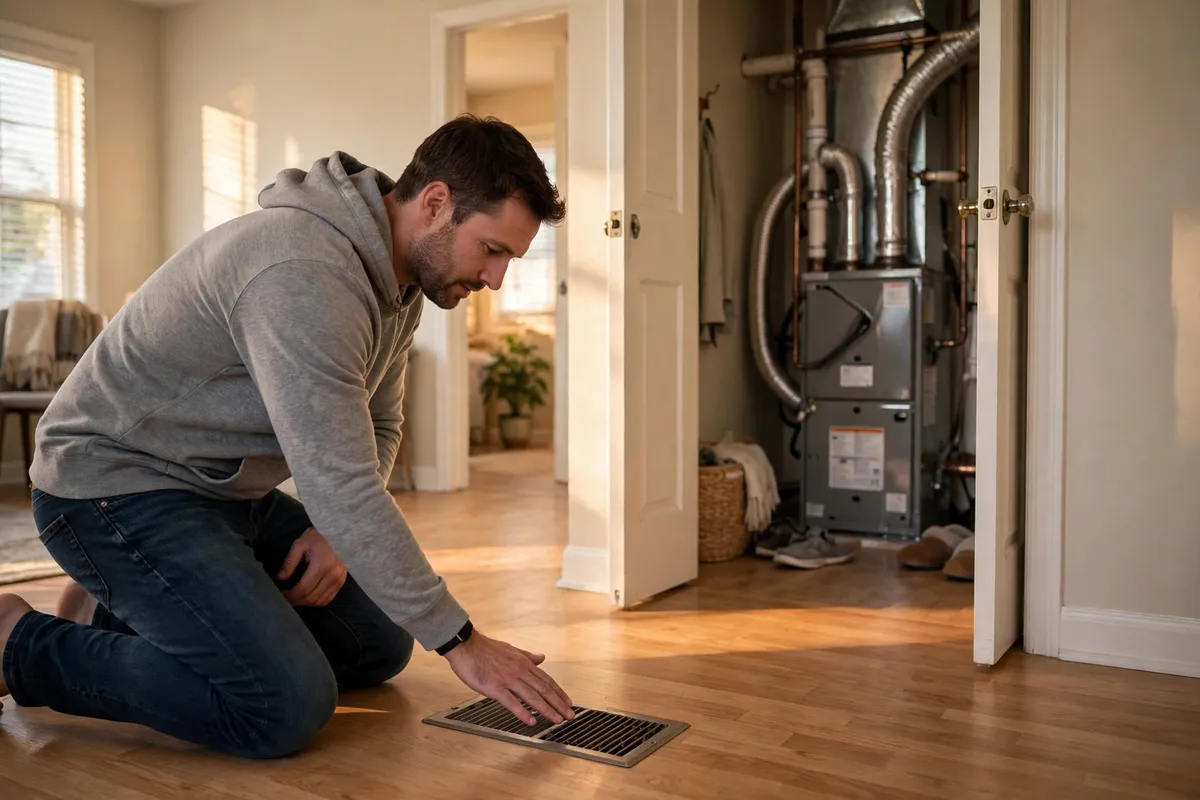
Three checks are safe for any homeowner and solve a real share of cold air calls. Do them in order before you schedule a visit.
Stop at checks you can do from outside the cabinet. Do not open the burner compartment, touch the gas valve, or try to light anything by hand. Gas and ignition work belongs to a technician with meters, and describing what you found on these checks makes the visit faster.
Cold air paired with a gas smell, a carbon monoxide alarm, or a house full of people who cannot stay warm on a cold East County night is an emergency, not a wait-and-see. Leave the house for gas smells, then call (619) 939-1577 from outside and the call goes to the priority route.
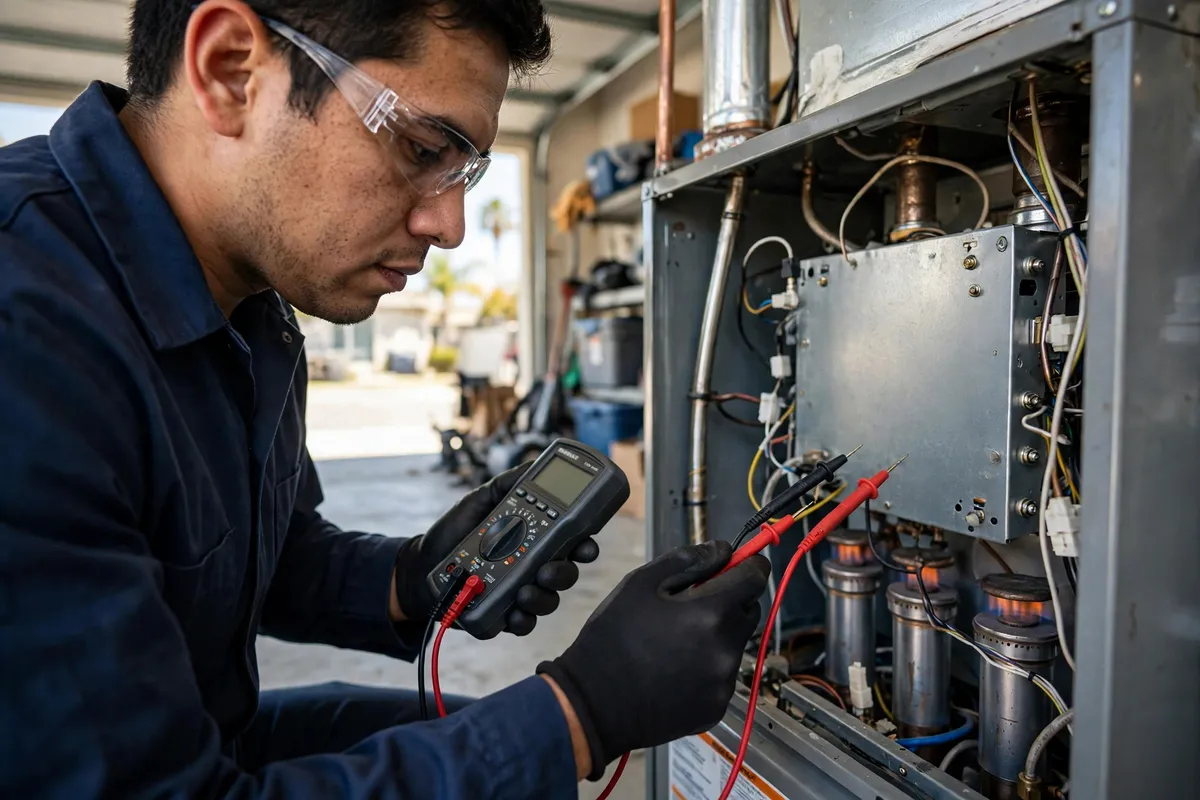
The technician starts at the thermostat and works through the sequence with a meter: call for heat, inducer, igniter current, gas valve response, flame signal strength, then blower timing. Each step either passes or points at the failed part, so the repair targets the actual fault instead of the symptom.
On gas systems that usually means cleaning or replacing the flame sensor, fitting a new igniter, or correcting a gas supply issue, followed by a full test cycle to confirm the vents run warm and stay warm. On electric systems the sequencer stages and heat strips are tested one by one. Most cold air calls are diagnosed in a single visit.
If your furnace is blowing cold air now, the matched service is gas furnace repair or electric furnace repair depending on your fuel type, and both start with the same sequence diagnosis.
Service area
We diagnose cold air from the vents in every city below. Select your city for local details, or call (619) 939-1577 now.
Answers to what La Mesa homeowners ask about this problem.
Ask by PhoneBecause air movement and heat are separate jobs. The blower can run its full cycle while the burners never light, and moving air across skin feels cooler than still air at the same temperature. If the vents never warm after several minutes, the heating side of the sequence has failed.
Usually not right away, but a furnace that keeps trying to ignite and failing is cycling its igniter and controls under stress, and a fan set to On runs up wear for no heat. If the air is still cold after one full cycle and the basic checks, switch the system off at the thermostat and call.
That pattern points to the burners shutting down partway through the cycle: a flame sensor losing its signal, a high limit switch tripping from restricted airflow, or a pressure switch dropping out. Note how long the warm phase lasts and tell the technician, because the timing narrows the cause.
When most rooms warm up and one does not, the furnace is usually fine and the problem is distribution: a closed or blocked vent, a crushed or disconnected duct run, or a damper that shifted. Attic ductwork in La Mesa homes bakes all summer and joints loosen, so one starved room is a duct call, not a furnace failure.
It can contribute. Closing several vents raises pressure inside the duct system, which can trip a high limit switch or make the blower work against restriction. A couple of closed vents is harmless, but sealing off half the house to save energy often creates the cycling and temperature complaints it was meant to solve.
Describe what the vents are doing and when it started. Call (619) 939-1577 and the diagnosis goes on the priority no-heat route.