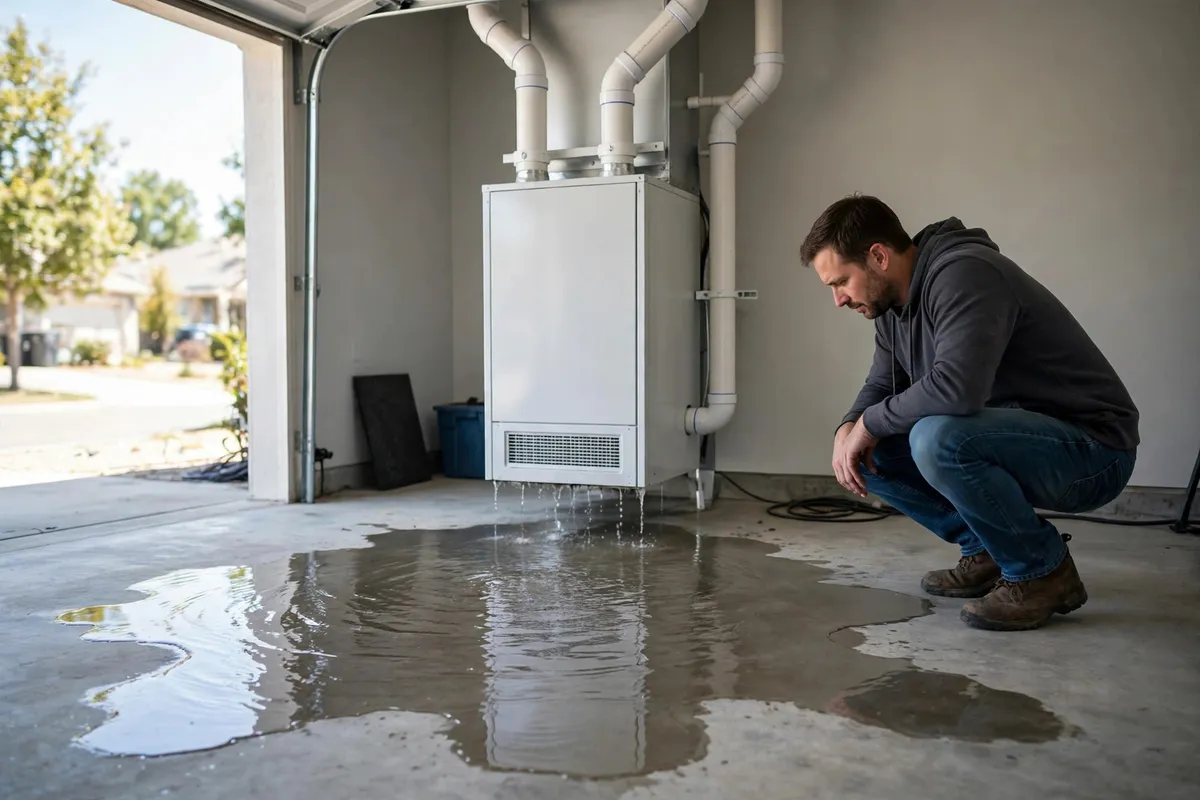
Usual sources
Condensate trap, drain line and condensate pump cover most leaks.
A furnace makes fire, not water, so a puddle under the cabinet surprises people. Modern high efficiency furnaces actually produce water on purpose, and the leak means that water found the wrong exit.
Water under a La Mesa furnace almost always comes from the condensate system of a high efficiency furnace: burning gas creates water vapor that condenses and should drain away, and a clogged trap, blocked drain line or failed condensate pump sends it onto the floor instead. Older standard furnaces do not make condensate, so water near them usually comes from the air conditioner coil or a plumbing neighbor. Call (619) 939-1577 and describe the furnace type if you can.
Condensate trap, drain line and condensate pump cover most leaks.
Furnaces rated above this percentage condense water as they run.
The air conditioner coil often drains through the same line.
Active leaks near electrical parts get priority scheduling.
High efficiency furnaces earn their efficiency by squeezing extra heat out of exhaust gas, and that process cools the exhaust until its water vapor condenses into liquid. A healthy system collects that condensate in a trap and sends it down a drain line or lifts it away with a small pump. Every part of that path is plastic, small bore and prone to clogging, which is why condensate leaks are the most common water complaint.
La Mesa sees these leaks at the start of heating season. The drain line sat dry or stagnant through the cooling months, algae and sediment settled in the trap, and the first long heating runs of December produce more water than the blocked path can carry. Attic installs make it worse: a leak overhead announces itself as a ceiling stain instead of a garage puddle.
The trap holds a water seal and collects debris. Algae, dust and rust flakes build a plug over the idle months, condensate backs up inside the furnace, and it escapes at the cabinet seams or trips the drain safety switch.
The drain tubing runs to a floor drain or outside. Lines that sag develop low spots where sediment settles, and lines that exit outdoors can block at the opening. The backup shows up at the furnace, far from the actual blockage.
Where no gravity drain exists, a small pump lifts the water out. Pumps fail electrically and mechanically, and their reservoirs overflow quietly onto the floor. A pump that hums but does not empty, or never runs at all, has given its notice.
The cooling coil sits in the same air handler and drains through the same line for much of the year. A clog there, or a cracked coil drain pan, leaks water that owners blame on the furnace because the furnace cabinet is where it lands.
Water and a dry towel will tell you a lot. These checks locate the source without opening the cabinet.
Keep water away from the control board and electrical connections: if water is reaching wiring, switch the system off at the breaker and call rather than wiping around live parts. Do not pour bleach or drain chemicals into the condensate line; the trap and pump are plastic, and a technician clears the line mechanically without risking the seals.
Water actively dripping onto electrical components, a leak spreading toward finished rooms or an attic leak staining the ceiling are same day problems, because water damage compounds by the hour and a furnace safety switch may shut the heat off next. Call (619) 939-1577 and mention water when you describe the call.
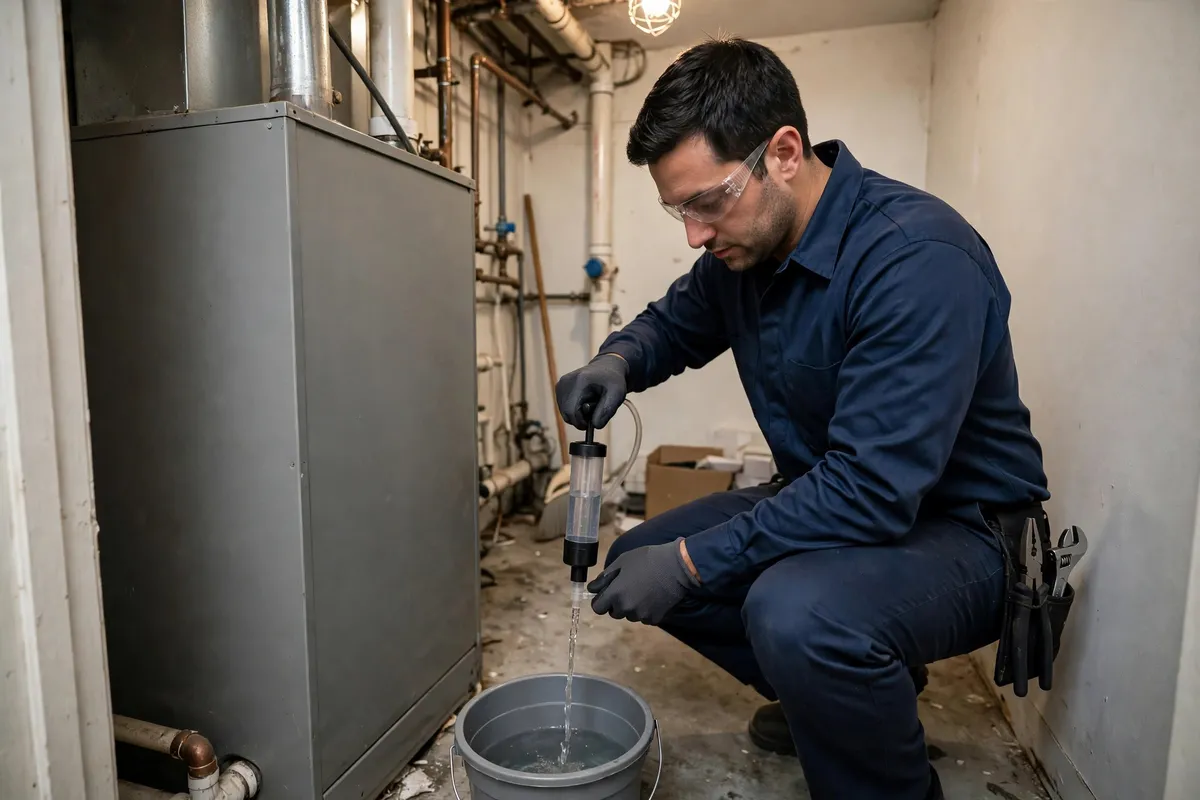
The technician starts by confirming the source, running heat and cooling separately if needed, then clears the condensate path end to end: trap opened and cleaned, line flushed and re-sloped where it sags, pump tested under load or replaced when it fails its lift test.
The furnace itself is checked for the secondary damage leaks cause: rust at the cabinet base, water marks on the control board, and a drain safety switch that may already be tripping the system. The visit ends with a long heating run to prove the condensate leaves through the drain and nowhere else.
Water complaints are one of the quiet specialties of furnace maintenance: a tune-up clears the trap and line before the season, which is exactly when these clogs would otherwise announce themselves.
Service area
We diagnose water under the furnace in every city below. Select your city for local details, or call (619) 939-1577 now.
Answers to what La Mesa homeowners ask about this problem.
Ask by PhoneOn a high efficiency furnace, it is condensed exhaust moisture that should have drained away. On any system, it can also be the air conditioner coil sharing the drain, a leaking condensate pump reservoir, or rarely a plumbing line near the unit. The pattern of when it appears, during heating, cooling or always, is the fastest way to sort it.
Yes, slowly and then suddenly. Condensate is mildly acidic, and a season of small leaks rusts the cabinet base, swells subflooring and feeds mold inside closet walls. Attic leaks stain ceilings below. Small puddles are worth fixing promptly precisely because the damage accumulates out of sight.
Often, especially when the puddle appears in summer or right after cooling runs. The coil and the furnace share the cabinet and frequently the drain line, so a coil drain clog lands water in exactly the same spot. A technician separates the two by running each system on its own and watching where the water starts.
You can check that the drain line exit outside is open and that the pump reservoir is not obviously jammed, and those two checks do help. Beyond that, the trap sits inside the cabinet and the line is usually cleared with a vacuum or brush from the right access point. Forcing water or chemicals through risks pushing the clog deeper and damaging seals.
Because only the furnace makes condensate in winter. A high efficiency furnace produces water the whole time it fires, so a blocked drain only overflows during heating runs. That timing is actually a helpful clue: a heat-only leak confirms the condensate path, while a constant leak points elsewhere.
Tell us when the puddle grows and where it starts, and we will bring the pump parts these systems use. Call (619) 939-1577.