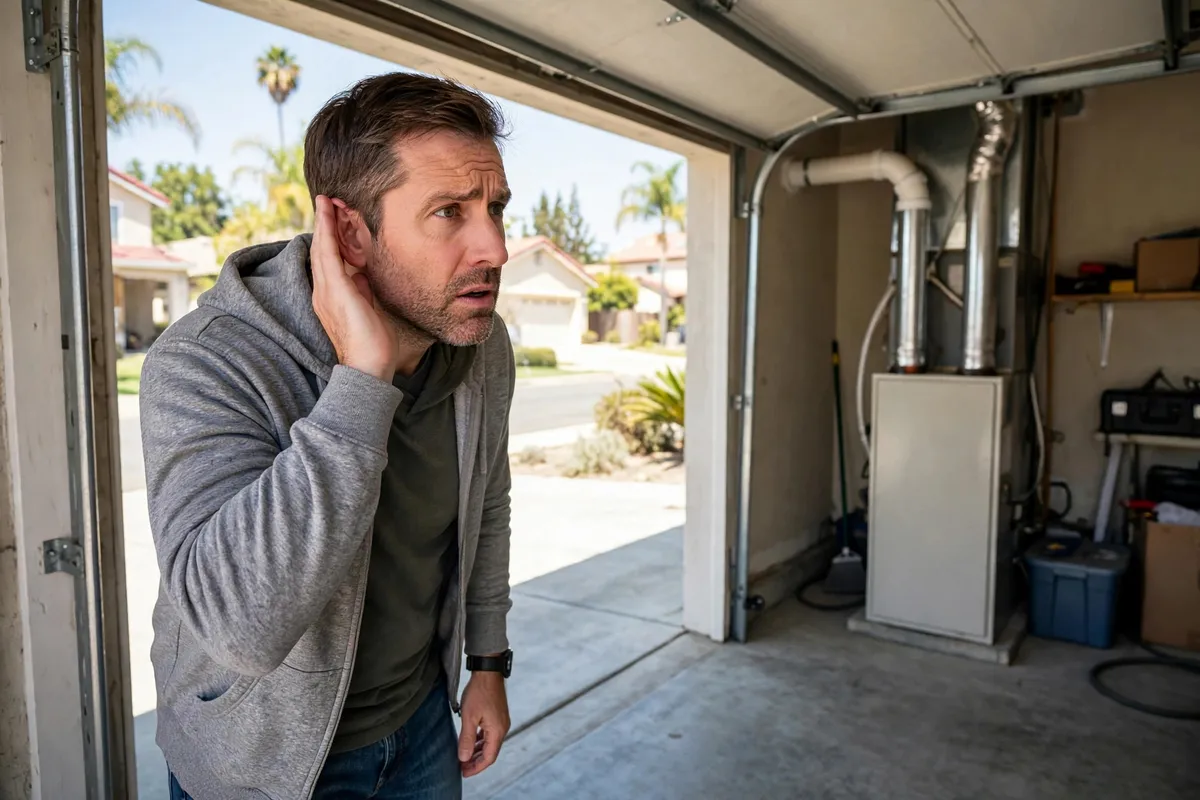
Sound families
Bangs, squeals, rattles and hums each point at different parts.
A furnace talks in a small vocabulary of bangs, squeals, rattles and hums, and each sound maps to a short list of parts. Learning which sound you have is the fastest route to the right fix.
Furnace noises in La Mesa homes follow a pattern: banging usually means delayed ignition or expanding ductwork, squealing points to the blower motor or its capacitor, rattling is often a loose panel or duct joint, and humming with no startup means a stuck motor or failed capacitor. New, loud or growing noises deserve a call to (619) 939-1577 before they become breakdowns.
Bangs, squeals, rattles and hums each point at different parts.
Scraping metal on metal means stop the furnace and call.
The blower assembly and the ductwork make most furnace noise.
Loud new noises on cold nights get priority scheduling.
Sound is diagnostic information. A technician hearing a furnace over the phone can often narrow the fault before arriving, because each moving part fails with its own signature noise, and each stationary part, like ductwork, complains in its own way too.
La Mesa hears most of its furnace noise in December. Systems that sat silent through the long cooling season start up with dried bearings, dust loaded blower wheels and duct joints that loosened through months of attic heat. The first cold snap is a stress test, and noise is how marginal parts announce themselves.
A boom or bang when the burners light usually means delayed ignition: gas builds for a moment before it catches, then ignites all at once. Dirty burners are the usual cause, and it is a sound to act on, not live with.
High pitched squeals come from the blower: worn motor bearings, a failing capacitor that lets the motor strain, or in older belt driven units, a belt at the end of its life. The pitch often rises as the motor warms up.
Loose access panels, duct joints that worked free, and screws shed by years of vibration all rattle when the blower runs. A blower wheel loaded unevenly with dust can also shake the whole cabinet at speed.
A hum with no blower movement and no ignition means a motor is powered but stuck, or its capacitor has failed. The hum is the motor trying. Left humming, it overheats, so this sound means switch off and call.
You can learn a lot about a furnace noise without opening anything. These checks sharpen what you can tell the technician.
Never reach into the cabinet while the blower can start, and do not run the furnace with panels off. Scraping, grinding or any metal on metal sound means switch the system off at the thermostat and call: a blower wheel destroying itself turns a motor job into a housing job.
Scraping or grinding metal, a bang at every startup, or a noise that arrives with a burning smell or a carbon monoxide alarm are emergency sounds. Switch the furnace off and call (619) 939-1577. Ordinary new rattles can book a normal visit, but these four cannot wait.
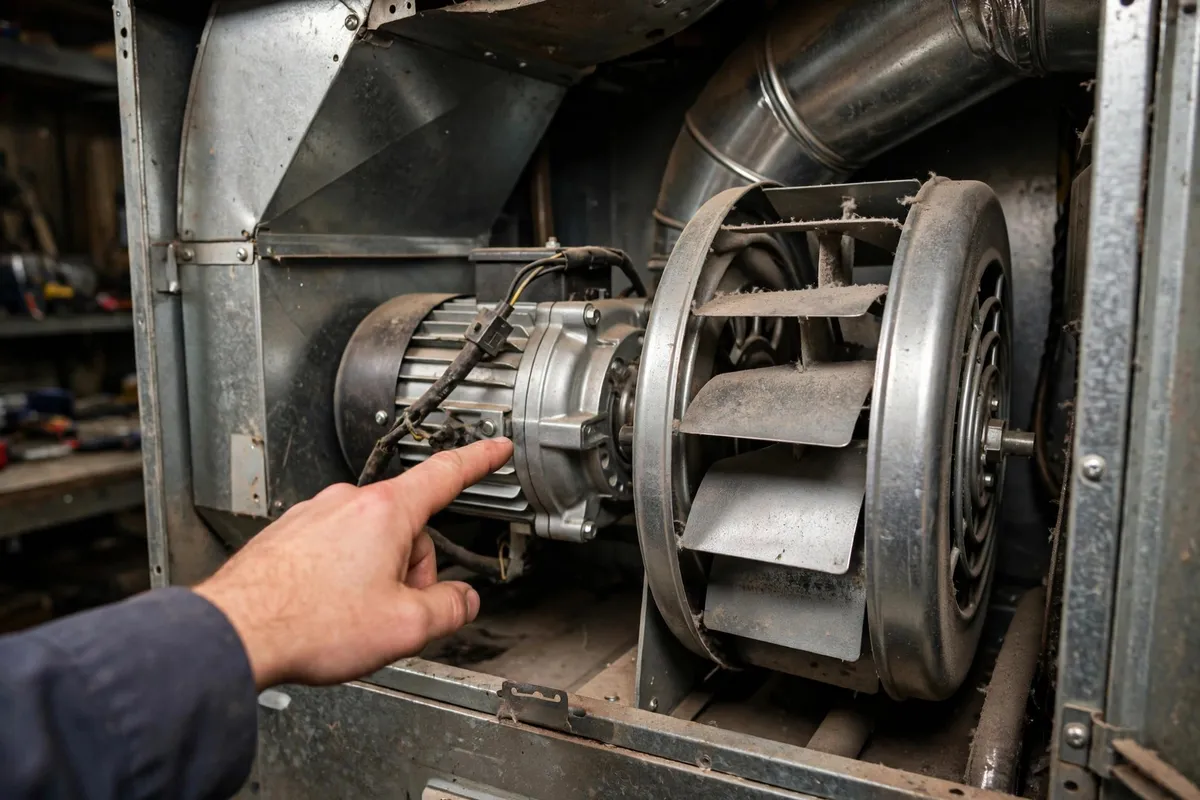
The visit starts with listening: the technician runs the full cycle and isolates which stage the noise belongs to, inducer, ignition, blower ramp up, steady run or shutdown. Then the cabinet opens and the suspects for that stage are inspected: burner condition, blower wheel balance, motor bearings, capacitor strength and panel hardware.
Fixes range from cleaning and reseating to a capacitor or motor replacement, and duct noise is corrected at the joint rather than at the furnace. The visit ends with a full run to confirm the sound is gone under load, not just at idle.
Most furnace noise traces back to the blower assembly, which is why blower motor repair is the matched service for squeals, hums and rattles that live inside the cabinet.
Service area
We diagnose strange furnace noises in every city below. Select your city for local details, or call (619) 939-1577 now.
Answers to what La Mesa homeowners ask about this problem.
Ask by PhoneScraping means metal is touching metal that should not touch: usually a blower wheel that has slipped on its shaft or cracked and is rubbing its housing. Switch the furnace off and call. Every cycle in that state carves more metal away, and a wheel replacement becomes a wheel and housing replacement.
Shutdown popping is usually the ductwork, not the furnace. Metal ducts expand while hot air flows and contract as they cool, and a duct that oil cans flexes with a pop or bang. It is harmless to the equipment, though a technician can often quiet it by stiffening or adjusting the run that flexes.
It depends on the sound. A mild rattle from a loose panel or a soft duct pop at shutdown is not dangerous. Scraping, grinding, repeated startup bangs and humming without movement are not safe to run. If you cannot place the sound in the harmless group, treat it as a call first, run later situation.
Because the first startup is the first real load after months of rest. Bearings sat dry, dust settled on the blower wheel unevenly, and duct joints loosened through a summer of attic heat. The noise was earned all summer; December is just when you hear it. A fall tune-up finds most of it in advance.
Ductwork is a frequent source. Expanding and contracting metal pops at startup and shutdown, loose joints rattle under airflow, and an undersized return can whistle. Part of the diagnosis is locating whether the sound lives in the furnace cabinet or out in the runs, because the fix is entirely different.
Describe the sound, or play us the recording, and we will tell you which part it points to. Call (619) 939-1577.