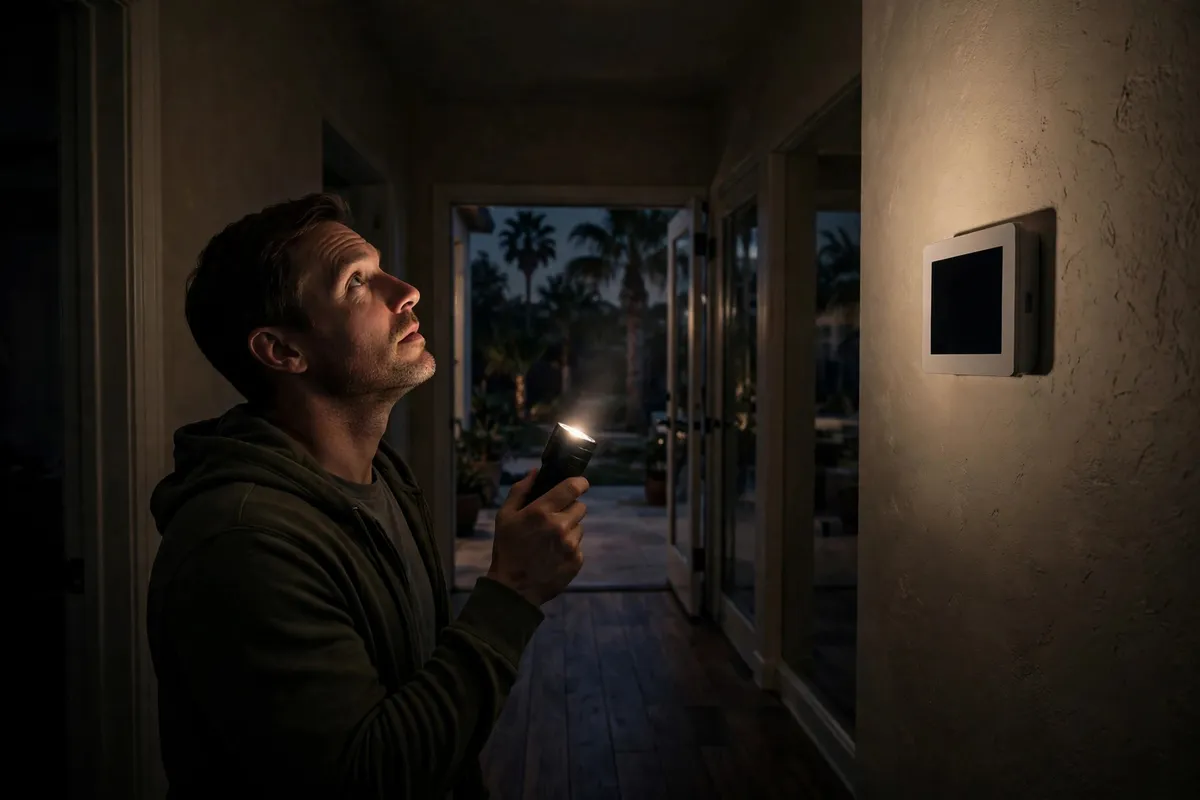
Likely causes
Power, thermostat signal, safeties, control board and ignition lockout lead the list.
You raise the thermostat and nothing happens: no hum, no clicks, no warm air. A completely silent furnace has its own short list of causes, and several of them are simple.
A La Mesa furnace that will not turn on has usually lost power, lost its thermostat signal, or locked itself out on a safety switch. Check the thermostat batteries, the furnace switch and the breaker first. If all three are fine and the furnace stays silent, call (619) 939-1577 for a sequence diagnosis.
Power, thermostat signal, safeties, control board and ignition lockout lead the list.
Batteries, the furnace switch and the breaker solve many no-start calls.
A typical La Mesa furnace sits from spring to fall before its first start.
Silent furnaces on cold nights go to the priority route.
Total silence is actually useful information. A furnace that tries and fails points at ignition or flame sensing, but a furnace that does nothing at all has lost something earlier in the chain: power to the unit, the signal from the thermostat, or permission from one of its safety switches.
The La Mesa pattern makes this the most common December call in East County. The furnace ran fine in February, sat through eight months of heat and Santa Ana dust, and meets its first cold night with a dead thermostat battery, a switch a family member flipped in June, or a control board connection that corroded quietly all summer.
A tripped breaker, a blown fuse on the control board, or the furnace power switch turned off during summer cleaning all cut the unit completely. No power means no sounds at all, which matches a silent furnace exactly.
Battery thermostats die quietly in the off season, and a blank or frozen display sends no call for heat. Wiring faults and a failed thermostat produce the same silence at the furnace.
The blower door switch, the high limit switch and the rollout switches all prevent startup when they read a problem. A door left slightly ajar after a filter change is the classic, and the furnace waits, silent, until it seats.
After repeated failed ignition attempts, many furnaces lock out and stop trying until power is reset. The board may show a fault code through the sight glass even when the house hears nothing.
Work through these in order. Each one is outside the cabinet, takes a minute, and is the same list our dispatchers walk callers through.
One breaker reset is a check; repeated resetting is not. Never bypass a safety switch, jumper a control board, or open the burner compartment. If the furnace still does nothing after these checks, the fault is inside the unit and needs a meter, not patience.
A silent furnace on a mild afternoon is a scheduling call. The same silence at nine at night with the house dropping through the fifties, young children or elderly family at home, or any gas smell anywhere in the house, is an emergency. Call (619) 939-1577 and the call is routed as a priority no-heat visit.
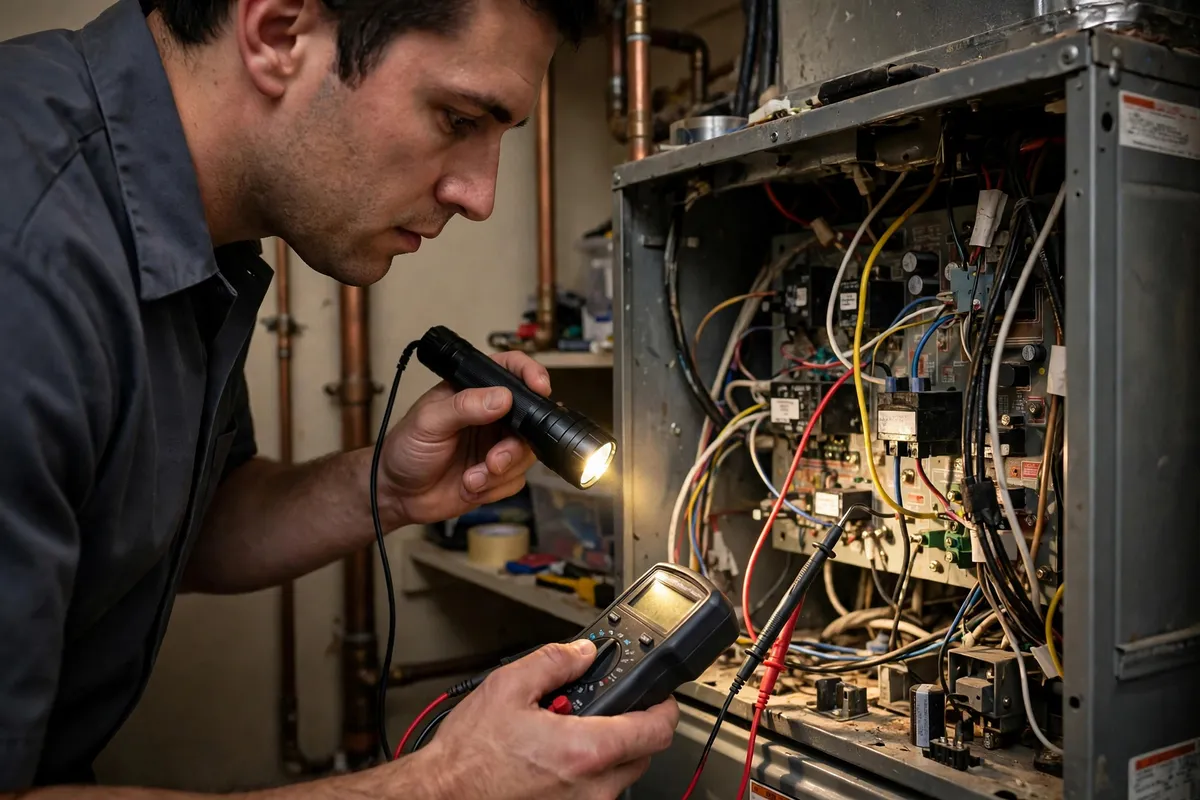
The technician verifies power at the unit first, then tests whether the thermostat call reaches the control board. That single measurement splits the problem in half: signal problems stay in the thermostat and wiring, while a good signal with no response points into the furnace safeties and board.
From there the safeties are tested in order, the board fault history is read, and the ignition sequence is attempted under observation. Most no-start faults are found in one visit, and many are corrected on the spot once the failed part is identified.
A furnace that will not start at all is the core of our emergency furnace repair service, and the same full-sequence testing applies whether the call comes at noon or midnight.
Service area
We diagnose furnace will not start in every city below. Select your city for local details, or call (619) 939-1577 now.
Answers to what La Mesa homeowners ask about this problem.
Ask by PhoneA lit screen only proves the thermostat has power. The call for heat still has to travel the thermostat wire to the furnace, and a broken wire, a loose terminal or a failed thermostat relay breaks that path. It can also mean the furnace itself has no power, which is why the technician tests both ends of the signal.
Yes, and it is one of the most common no-start findings. The furnace simply has no power, so it makes no attempt to run. Breakers trip for a reason, though: a struggling blower motor or a short in the system. Reset once; if it trips again, leave it off and call, because the breaker is reporting a real fault.
Most control boards blink a fault code through the sight glass in the blower door: a pattern of flashes that maps to a failed step, such as ignition failure or a pressure switch fault. Count the pattern and tell the technician when you call. It points the diagnosis at the right system before the panel even comes off.
The blower door almost certainly did not seat fully when it went back on. Behind that door sits a safety switch that cuts the furnace off unless the panel is pressed home. Reseat the door firmly and try again. If the furnace still stays silent, the filter change is a coincidence and the fault is elsewhere.
Most residential furnaces do not have a homeowner reset button for the heating sequence. Power cycling at the furnace switch, off for a full minute and back on, clears some control board lockouts. If the furnace locks out again after one power cycle, the lockout is protecting the system from a real fault and it needs diagnosis, not repeated resets.
Tell us what the thermostat shows and what the furnace does, even if the answer is nothing at all. Call (619) 939-1577.