Top causes
Overheating, flame sensing and thermostat faults lead the list.
On, off, on again five minutes later. A furnace that cannot hold a steady run is short cycling, and every short cycle is extra wear on the parts that start it.
Short cycling in La Mesa, when a furnace starts and stops every few minutes, is most often the furnace protecting itself: overheating from a clogged filter trips the high limit, a dirty flame sensor drops the burners, or the thermostat is misreading the room. Start with a fresh filter. If the cycling continues, call (619) 939-1577 for testing before the wear compounds.
Overheating, flame sensing and thermostat faults lead the list.
Cycles shorter than this count as short cycling worth fixing.
A clean filter cures the overheating pattern on its own.
Cycling that leaves the house cold gets priority scheduling.
A healthy cycle runs ten to fifteen minutes or more, warms the house evenly, and rests. Short cycling breaks that rhythm: the furnace fires, something tells it to stop within minutes, it cools, and it fires again. The house gets lukewarm air in bursts while the igniter, gas valve and blower motor absorb start after start.
Mild La Mesa winters hide the problem at first. A furnace that short cycles on a fifty degree evening may still hold temperature, so the only signs are uneven rooms and a system that sounds busy all night. The wear is real even when the comfort complaint is mild, and the pattern usually worsens as the underlying fault does.
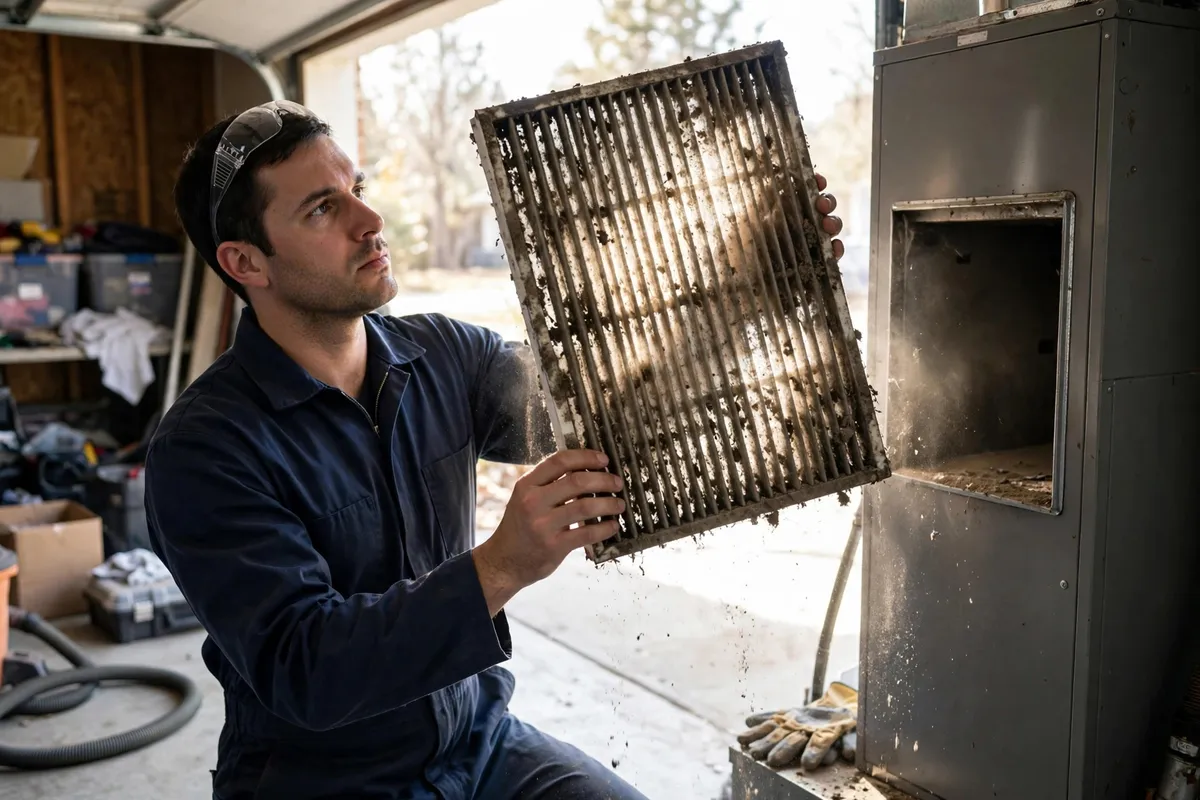
A clogged filter, blocked returns or closed vents starve the furnace of air. Heat builds inside the cabinet until the high limit switch shuts the burners down, the unit cools, and the cycle repeats. This is the single most common short cycling pattern.
The sensor proves flame to the board. A sensor coated in oxidation reads a weak signal and the board shuts the burners off seconds after ignition, then tries again. The result is a furnace that lights, dies, and relights.
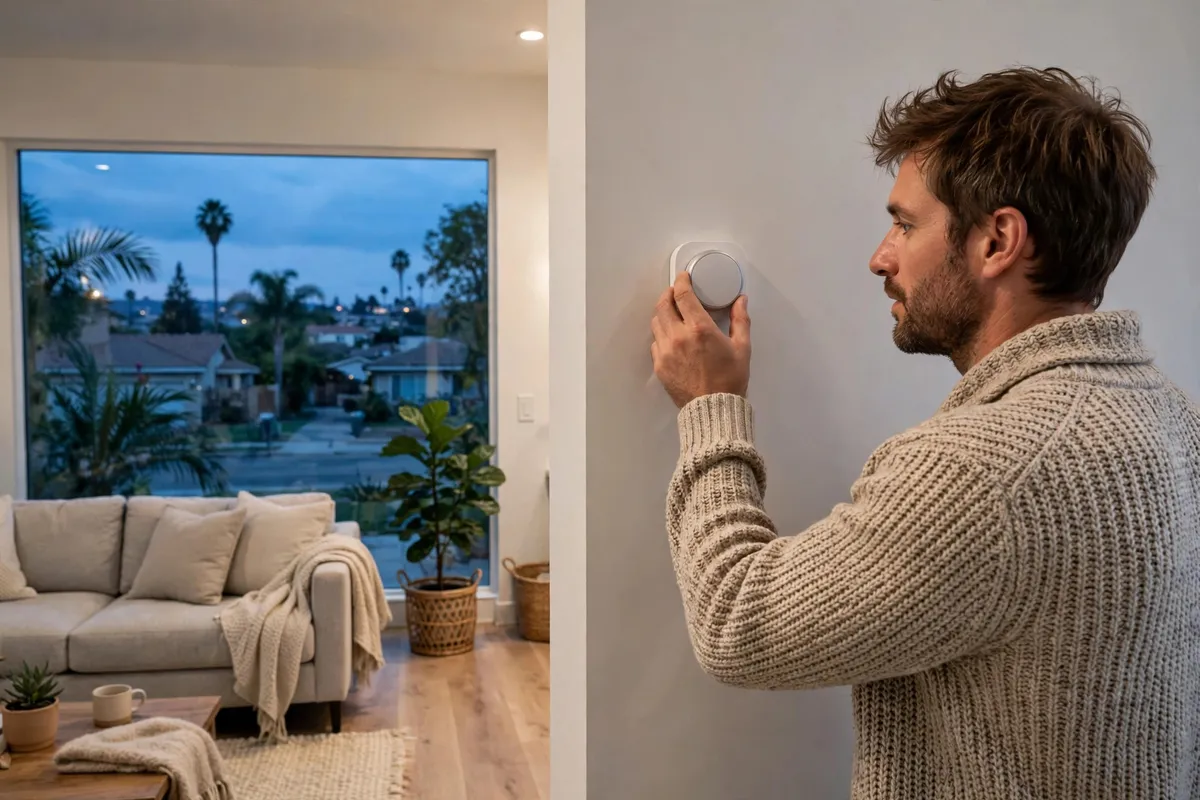
A thermostat placed near a heat vent, in direct sun, or above a warm appliance satisfies itself before the house warms. It calls, the furnace starts, the thermostat warms instantly, and the call ends. The furnace is obeying bad information.
A furnace too large for the house blasts the rooms near the thermostat to temperature in minutes and shuts down, over and over. Oversizing is common in replacements where the new unit matched a guess instead of a load calculation.
Time the cycles first, then check the airflow. Those two observations separate most short cycling causes before a technician arrives.
Do not silence the pattern by raising the thermostat far past comfort or by holding the fan on. The limit switch that stops an overheating furnace is a safety, and defeating the cycle leaves the safety working against a worsening fault. If a fresh filter does not lengthen the cycles, the cause is inside the unit.
Short cycling becomes urgent when the house will not hold temperature on a cold night, when the furnace cycles every minute or two, or when cycling arrives with a burning smell or rollout signs at the burner. Call (619) 939-1577 and describe the cycle timing; it goes on the priority route.
Diagnosis measures what guessing cannot: temperature rise across the furnace, static pressure in the ducts, flame signal strength in microamps, and the actual cycle timing under load. Those four numbers separate an airflow problem from a sensor problem from a sizing problem with very little ambiguity.
The fix follows the finding: airflow restored by filter, duct or blower work; the flame sensor cleaned or replaced; the thermostat relocated or recalibrated. Oversized systems get honest options, from staging adjustments where the equipment allows to planning a right sized replacement.
Because so many short cycling cases begin as simple neglect, furnace maintenance is the matched service: a tune-up cleans the sensor, replaces the filter and verifies the limits before the pattern starts.
Service area
We diagnose furnace starts and stops in every city below. Select your city for local details, or call (619) 939-1577 now.
Answers to what La Mesa homeowners ask about this problem.
Ask by PhoneOn a typical cool evening, ten to twenty minutes of run time followed by a rest is healthy. Very mild weather shortens cycles naturally because the house needs less heat, but runs of two to five minutes that repeat all evening are the pattern to act on, especially with uneven room temperatures.
A two minute run that ends abruptly is most often a protection shutdown: the high limit switch opening because heat cannot leave the cabinet fast enough, or the control board losing the flame signal. Both are the furnace defending itself. A fresh filter rules out the simplest airflow cause; beyond that it needs testing.
Yes. A thermostat on a sunlit wall, beside a lamp, or in the wash of a nearby supply vent reads a room that warms and cools faster than the house itself. It ends calls early and restarts them early. Moving or shielding the thermostat is a small job that changes the whole rhythm of the system.
Some two stage and modulating furnaces can be set to run longer at low fire, which softens the pattern considerably. Airflow adjustments and thermostat cycle settings also help. A single stage furnace that is badly oversized has fewer options, and a technician should tell you plainly which group yours falls in.
Yes. Every start burns gas on the ignition sequence and runs the inducer and blower before any heat reaches the rooms, so a furnace starting four times an hour delivers less of its heat to the house than one starting once. Short cycles also wear the igniter and motor faster, which shows up later as a repair bill instead.
Tell us how long your furnace runs before it stops, and we will bring the gauges that find out why. Call (619) 939-1577.