Strange Furnace Noises and What They Mean
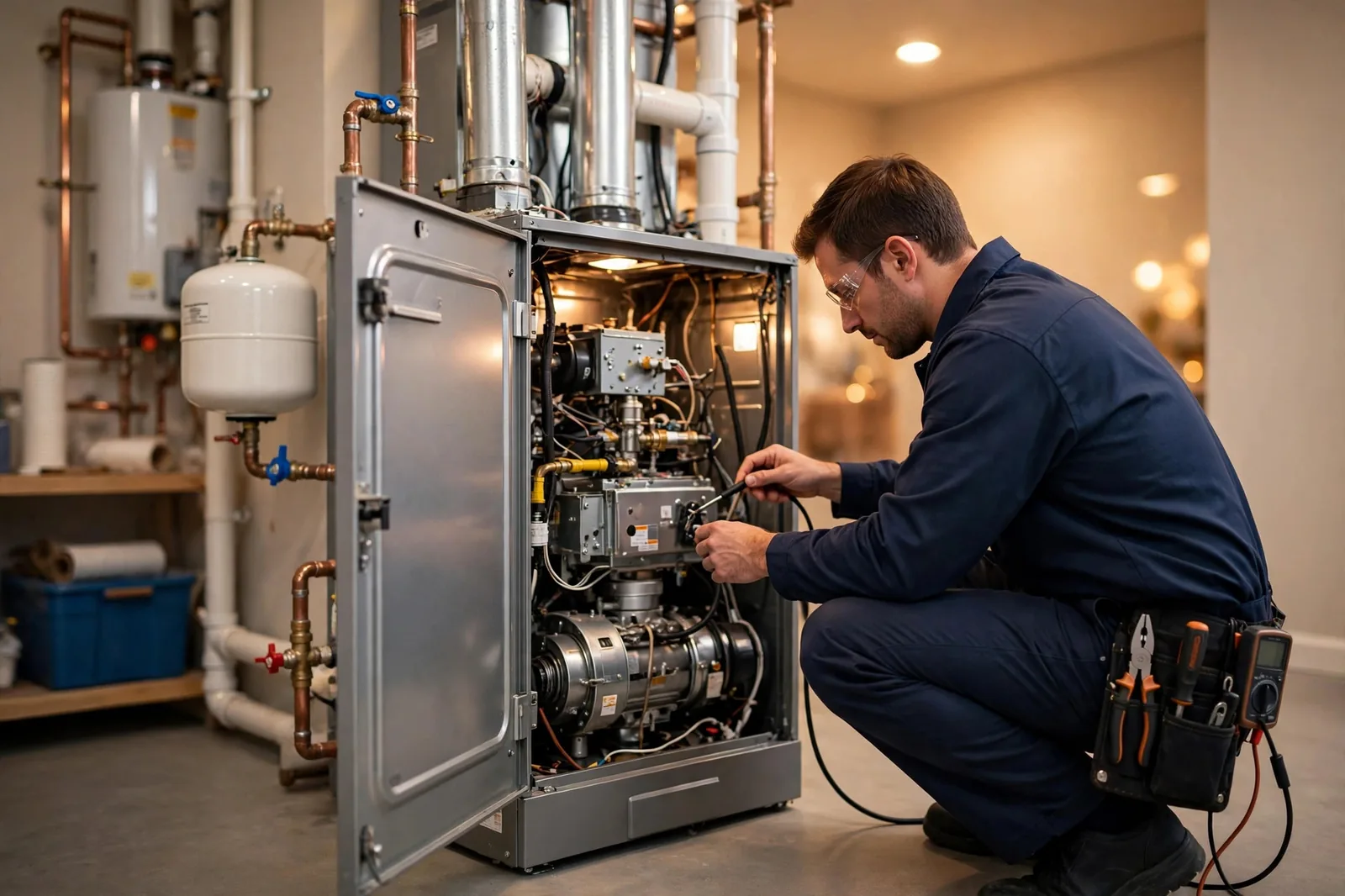
Banging usually means delayed ignition or expanding ducts, squealing points to a worn blower belt or motor bearing, rattling suggests loose panels or ductwork, and humming with no startup indicates a stuck blower motor or failed capacitor. New or loud noises deserve prompt attention before a small issue becomes a breakdown.
Furnaces talk. Most of what they say is benign: the click of relays, the rush of the inducer, the soft whoosh of ignition. But furnaces also have a vocabulary of distress, and learning a few key sounds helps you tell the difference between character and a cry for help. Here is what the common ones mean and what to do about each.
Banging or Booming at Startup
A loud bang when the burners light is the sound of delayed ignition: gas built up before the flame caught, then ignited all at once. Causes include dirty burners, a weak igniter or ignition timing problems. Occasional soft pops are one thing; a hard boom that shakes the ductwork is another. Repeated delayed ignition stresses the heat exchanger and should be diagnosed. If the boom is violent or you smell gas, shut the furnace down and call.
Squealing or Screeching
High-pitched squealing that changes with blower speed usually comes from the blower: worn bearings or a slipping belt on older belt-drive units. It starts intermittently and gets constant as wear progresses. Bearing noise never improves on its own, and a seized blower can overheat the furnace. This is a schedule-soon repair, not an emergency, unless the blower stops entirely.
Rattling and Vibrating
Rattles are often simple: a loose access panel, a vibrating duct section or debris in the blower housing. Tighten what is loose and see if it stops. Persistent rattling from inside the furnace, especially rhythmic with the blower, can mean a blower wheel out of balance or a failing motor mount. If you can isolate it to a panel, it is trivial; if it is internal, it needs hands-on diagnosis.
Humming That Was Not There Before
A new electrical hum, especially one that starts and stops with the blower trying to start, points to a failing capacitor: the motor gets power but cannot start properly. A loud transformer hum can indicate electrical issues. Do not let a humming motor sit energized; turn the system off and call (619) 939-1577.
Whistling From the Vents
Whistling is airflow talking: high velocity through a restriction. The usual suspects are a clogged filter, closed vents or undersized ductwork. Replace the filter and open the vents first. If the whistle persists with a clean filter, the duct system needs assessment: chronic whistling means the blower is working too hard, which shortens its life.
Booming Ducts and Popping Metal
Thin sheet-metal ducts expand and pop as they heat, especially on the first cycle of the day. A few pops are normal character for older duct systems. Loud, repeated booming that is new can indicate pressure problems from restricted airflow. As with most furnace sounds, the question is whether it is new and whether it is getting worse. New and worsening always earns a look.
When in Doubt, Listen Once and Call
You do not need to diagnose the sound yourself. Note when it happens (startup, during the run, at shutdown), where it seems to come from, and whether it is new. Then call (619) 939-1577 and describe it. Sounds are one of the most useful diagnostic clues a homeowner can provide, and
Duct Noises vs Furnace Noises: Telling Them Apart
Not every sound comes from the furnace itself. Ductwork has its own vocabulary: popping and booming as thin metal expands with heat, whistling where air squeezes through restrictions, and rumbling where a duct section has come loose from its hanger. The location test helps: stand near the furnace during a cycle, then stand near the loudest vent. If the sound is loudest at the equipment, suspect the furnace. If it is loudest far from the equipment, suspect the ducts. Both matter, but they lead the technician down different paths, so the distinction saves diagnostic time.
How to Describe a Noise So the Technician Gets It Right
Four details make a noise report genuinely useful. When does it happen: at startup, during the run, at shutdown, or constantly? Where does it seem to come from: the furnace cabinet, a specific vent, or everywhere? What does it sound like: bang, squeal, rattle, hum, whistle? And is it new or getting worse? A phone recording helps enormously, since sounds are hard to describe precisely. With those four answers, the technician often knows the likely cause before arriving, which means the right parts come along.
the good ones get fixed before they become breakdowns.
New Furnace, New Sounds: What Is Normal After Installation
A brand-new furnace sounds different from the one it replaced, and that alarms some homeowners unnecessarily. Variable-speed blowers ramp up gradually instead of blasting on, which sounds odd if you are used to single-stage equipment. New duct connections may tick as they expand for the first few cycles. The installing contractor should walk you through the normal sounds before leaving. What is not normal after an installation: persistent banging, whistling that was not there before, or any new gas odor. Those warrant a callback, and a reputable contractor will return to check their work.
Frequently Asked Questions
Which furnace noise means call immediately?
A gas smell with any noise, a loud boom at ignition, or grinding that suggests something mechanical failing. Shut the system down and call (619) 939-1577. For gas smells, leave the house and call the utility first.
Is a little noise at startup normal?
Brief clicks, the inducer ramping up and minor metallic ticks as the heat exchanger warms are normal. New, loud or worsening sounds are not.
Can noises go away on their own?
Dust-related startup sounds sometimes fade as the season progresses. Mechanical noises, banging, squealing, grinding, do not improve with time.
Need Help With Your Furnace?
If this guide describes what your furnace is doing, the next step is a professional diagnosis. Call (619) 939-1577 and describe the symptoms; FurnaceGuard La Mesa will match you with an independent contractor and schedule the visit.