Furnace Repair Cost in La Mesa, CA: What Affects the Price
Furnace repair cost in La Mesa depends on which part failed, the age of the furnace, gas versus electric fuel type, how hard the unit is to access, and whether it is an emergency call. No honest company can price a repair without diagnosis, because the symptom alone does not identify the failed part.
One of the most common questions La Mesa homeowners ask is what furnace repair costs, and the honest answer is that it depends. Two neighbors with the same symptom can get very different invoices, because the symptom is not the repair. This guide breaks down the actual factors that drive furnace repair cost in La Mesa, CA, so you can understand quotes, ask better questions, and avoid overpaying.
The Failed Part Sets the Range
The single biggest cost driver is which component failed. Small electrical parts like igniters, flame sensors, and capacitors are quick to replace and the parts themselves are modest. Mid-range repairs include blower motors, inducer motors, and control boards: the parts cost more and the labor involves more disassembly. Major repairs involve the heat exchanger or the gas valve, where both parts and labor climb significantly. This is why a phone quote is meaningless. A furnace that will not start might need a twenty minute sensor cleaning or a blower motor replacement, and no one can tell which until the unit is tested. Any company that names a price before diagnosis is guessing, and you do not want to pay for guesses.
Age of the Furnace
Furnaces in La Mesa often run 15 to 20 years, and many mid-century ranch homes still heat with units installed decades ago. Age affects cost in two ways. First, parts availability: manufacturers support current models well, but components for 20-year-old furnaces can be scarce, which means longer waits and sometimes higher part prices. Second, cascade work: opening up an old furnace often reveals secondary issues like brittle wiring, corroded connections, or a filthy blower wheel that should be addressed while the unit is apart. A good technician will flag these without inflating the job, but they do add to the total. This is also where the industry $5000 rule comes in: multiply the repair cost by the furnace age, and if the result tops $5,000, replacement is usually the smarter money. It is a rule of thumb, not a law, but it keeps emotions out of the decision.
Gas vs Electric
Fuel type changes the parts involved and therefore the cost structure. Gas furnace repairs center on ignition components, gas valves, and venting, and gas work demands extra safety verification, which adds diagnostic time. Electric furnace repairs center on sequencers, heating elements, and high-amperage electrical connections. Neither is universally cheaper to fix. What matters for your wallet is hiring a technician fluent in your fuel type, because misdiagnosis is the most expensive outcome of all: paying for a part that was never the problem, then paying again for the real fix.
Where the Furnace Sits
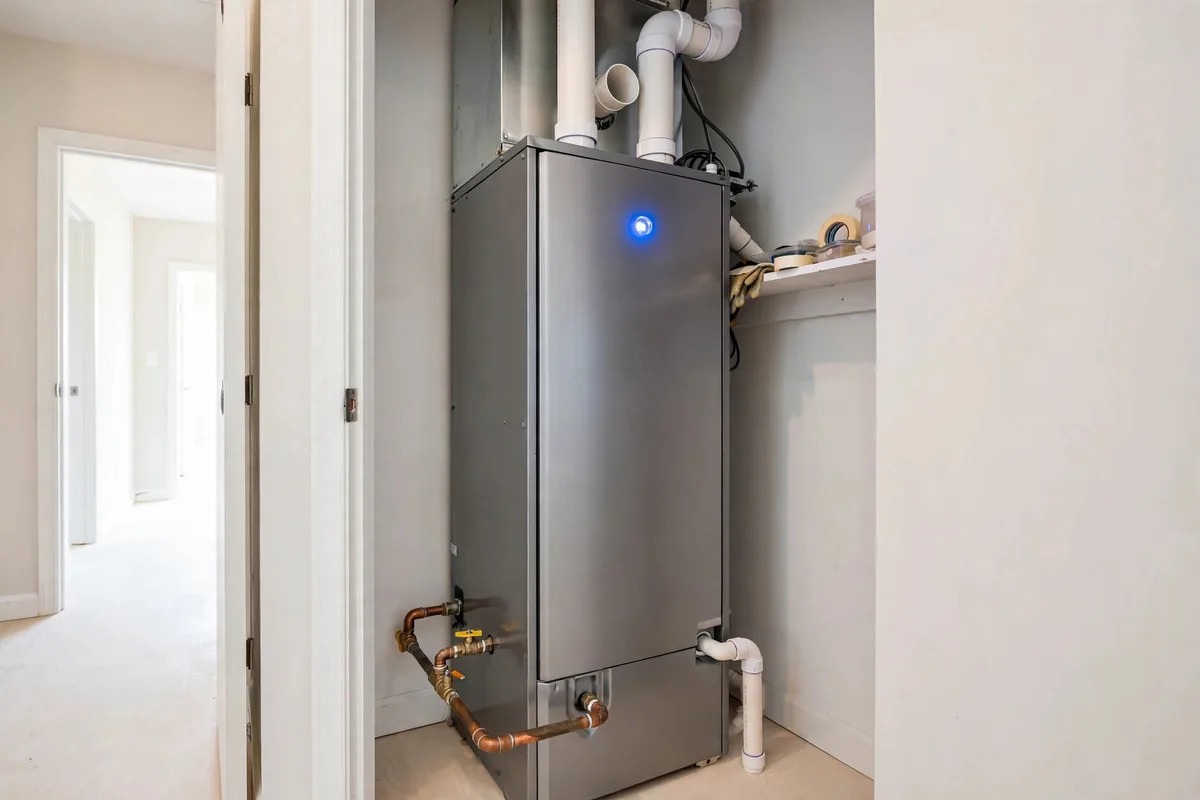
Access is an underappreciated cost factor. A furnace in an open garage with clear workspace is fast to service. A furnace crammed into a hall closet, a low attic reached by pull-down stairs, or a crawlspace changes the job entirely. La Mesa's older ranch homes are notorious for tight installations, and condos sometimes bury air handlers above finished ceilings. Difficult access adds labor time, and in extreme cases the technician may need a helper. There is nothing wrong with this: safe work in tight spaces simply takes longer. But it explains why your neighbor's identical repair cost less when their furnace sits in a spacious garage.
When You Call
Timing affects what you pay. A scheduled daytime visit during the mild months is the baseline. A no-heat call on a cold December night, when San Diego temperatures drop into the 40s and every company in East County is slammed, commands emergency rates. The premium reflects real costs: overtime labor, disrupted schedules, and stocked trucks. If your furnace fails but the house is still tolerable, perhaps with space heaters in bedrooms, waiting for a next-day scheduled visit can save meaningful money. If the house is going cold, pipes are at risk, or someone vulnerable is home, pay the premium without hesitation. Safety and frozen pipes are always more expensive than an emergency visit.
Diagnostic Complexity
Some failures announce themselves: a visibly cracked igniter, a blower that hums but never spins. Others hide. Intermittent short cycling, where the furnace starts and stops unpredictably, can require extended observation and meter testing to pin down. Control board issues can mimic sensor failures. Each layer of testing adds labor time. A thorough diagnostic costs more up front than a guess, but it is cheaper than replacing the wrong part. When comparing quotes, ask what testing was actually performed. A detailed explanation of the failure is worth more than a low number attached to a shrug.
Keeping the Bill Reasonable
You have more control over repair costs than it seems. Annual fall maintenance catches worn igniters, dirty sensors, and weak capacitors before they fail on the coldest night, when emergency rates apply. Changing filters on schedule protects the blower motor and heat exchanger, the two most expensive components to replace. When something does fail, describe the symptoms precisely when you call (619) 939-1577: what the furnace does, what it does not do, any noises, any error codes on the thermostat. Good information helps the technician bring the right parts, which can turn a two-visit job into one. And when a major repair is recommended on an older furnace, ask for the repair-or-replace math in writing. An honest company will walk you through it without pressure.
The Bottom Line on Cost
Furnace repair cost in La Mesa is driven by the failed part, the age of the equipment, fuel type, access, timing, and diagnostic complexity, not by the symptom alone. Understanding these factors lets you read a quote with confidence and spot the difference between thorough work and padding. If your furnace needs attention, call (619) 939-1577 for a proper diagnosis and a plain explanation before any work is approved.
Frequently Asked Questions
Why do furnace repair costs vary so much?
Because the failed part, the age of the furnace, the fuel type, and the difficulty of access all change the job. A flame sensor cleaning and a blower motor replacement are different jobs with different parts and labor, even though both are called furnace repair.
Does an older furnace cost more to repair?
Often, yes. Parts for furnaces over 15 years old can be harder to source, and older units sometimes need additional work once opened up, such as cleaning or tightening connections that have aged along with the failed part.
Is emergency furnace repair more expensive?
After-hours and no-heat emergency calls typically carry a premium over scheduled daytime visits, because the company is dispatching a technician outside normal routing. If the problem can safely wait until morning, a scheduled visit is the economical choice.
Can I get an exact price before the technician visits?
No honest company can price a repair without diagnosis, because the symptom does not identify the failed part. What you should expect is a clear written explanation of the failure and the recommended fix before any work is approved.
At what point should I replace instead of repairing?
When the furnace is past about three-quarters of its expected life and the repair is a large fraction of replacement cost, replacement usually wins. A cracked heat exchanger on an older furnace is the clearest replace signal, for safety reasons as well as economics.
Need Help With Your Furnace?
If this guide describes what your furnace is doing, the next step is a professional diagnosis. Call (619) 939-1577 and describe the symptoms; FurnaceGuard La Mesa will match you with an independent contractor and schedule the visit.